Good Taste in Luxury is Essential

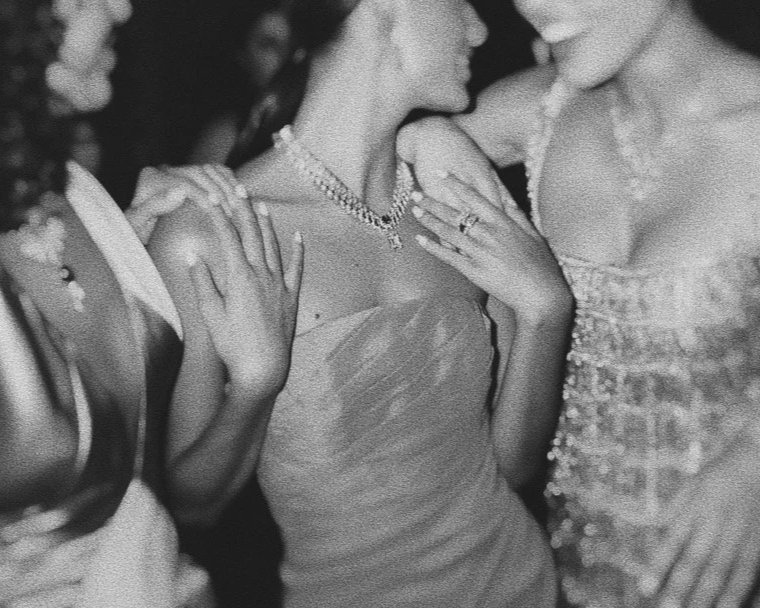
Model Christy Turlington at the iconic gourmet grocer Dean & DeLuca
In luxury, taste is more than aesthetic preference. It is a form of discernment—and one of the most important capabilities a leader can develop.
Leadership is often discussed through the language of vision, strategy, execution, and performance. These qualities matter in every business, including luxury. But luxury asks something additional of its leaders: it asks for taste.
This can be uncomfortable territory. Taste is inherently more difficult to quantify than revenue growth, market share, conversion, or margin. It can appear subjective, even frivolous, particularly within organizations increasingly governed by data and optimization.
Yet luxury is not built through optimization alone.
Every luxury brand is the result of thousands of decisions about what should exist and how it should be expressed. Which product enters the assortment. Which image represents the brand. Which designer, photographer, architect, collaborator, material, color, word, space, or experience belongs within its world. Equally important are the things that are rejected.
At some level, each of these choices requires discernment. And when that discernment is exercised consistently and exceptionally, we often call the result good taste. For leaders in luxury, then, taste is not simply personal preference. It is part of the work.

The Brand Atelier
Everesse is a luxury brand consultancy shaping the strategic architecture that defines meaning, signals value, and sustains distinction.
What Good Taste Actually Means
Taste is often mistaken for an appreciation of beautiful things, but that is only the surface. Good taste is better understood as discernment: the ability to recognize quality, proportion, relevance, originality, and appropriateness—and to distinguish between what is merely attractive and what is truly exceptional.
It requires sensitivity, but it also requires knowledge. The more deeply you understand design, art, architecture, fashion, hospitality, craftsmanship, and history, the larger your frame of reference becomes. You begin to identify lineage and influence. You can see when something is derivative, when an idea has been poorly executed, or when an unconventional choice is precisely what makes something compelling.
This is why taste cannot simply be reduced to preference. Preference asks, Do I like this? Taste asks more demanding questions: Is it good? Is it right? Does it belong here? What does it communicate? Will it still feel relevant when the novelty disappears?
Beyond aesthetics, taste has cultural value. Culture is shaped by what we choose to make, preserve, celebrate, elevate, and pass forward. The objects, spaces, images, music, literature, fashion, architecture, and experiences we create become expressions of what we value and, eventually, records of how we lived.
Good taste contributes to that culture by upholding codes of beauty, originality, craft, and thoughtfulness. It encourages us to distinguish between what merely attracts attention and what deserves it. In a world increasingly shaped by speed, volume, algorithms, and constant novelty, discernment becomes even more valuable.
Taste therefore matters because what we choose to elevate matters. Our collective standards influence what gets created next.
Taste in Luxury Is a Leadership Capability
Every leader edits. As a senior executive, you decide which ideas receive resources, which products move forward, which creative territories are pursued, which opportunities are declined, and which standards are considered acceptable.
But in luxury, those decisions carry an additional responsibility. You must consider not only whether something will perform, but whether it strengthens or weakens the meaning of the brand. This is where taste becomes strategically important.
A commercially attractive opportunity can still be wrong for a luxury house. A campaign can perform well while diminishing its stature. A product can generate revenue while introducing visual codes that gradually make the brand less coherent. A partnership can create enormous visibility while making the brand feel more commonplace.
The numbers may explain what is happening. They cannot always determine what should happen.
As a luxury leader, you therefore need to hold quantitative intelligence and qualitative judgement at the same time. Good taste helps you distinguish between expansion and dilution, accessibility and ubiquity, relevance and conformism, evolution and incoherence.
It also gives you the confidence to say no. Luxury brands are defined as much by what they refuse as by what they produce. Restraint protects distinction, but requires the conviction to understand that not every opportunity should be taken simply because it is available.
Why Taste Matters More in Luxury
All brands benefit from thoughtful creative judgment. Luxury depends on it.
Luxury creates value far beyond utility. A beautifully made handbag does not command its price because it carries belongings exponentially better than an ordinary one. A luxury hotel room does not derive its entire worth from providing a place to sleep. A watch, fragrance, automobile, restaurant, or piece of furniture becomes luxurious through the layers of meaning surrounding the object or experience.
Design matters. Materials matter. Craftsmanship matters. But so do atmosphere, symbolism, proportion, storytelling, service, and presentation. Together, these elements shape perception—and perception is fundamental to luxury.
That makes the category unusually sensitive to seemingly small choices. The typography on an invitation, lighting inside a boutique, weight of packaging, casting of a campaign, language used by a sales associate, soundtrack at an event, or manner in which a product is photographed can reinforce—or undermine—the whole.
Your customer may never consciously identify each element, but they experience the cumulative effect. When everything works in concert, the brand feels assured. When it does not, something feels wrong even when the customer cannot articulate why.
Leading in luxury therefore requires sensitivity to details that another business might reasonably dismiss as insignificant. This does not mean you need to art-direct every campaign or select every fabric. In fact, strong leadership requires trusting talented specialists to do their work.
But you do need enough taste to recognize excellence when you encounter it, protect it when business pressures threaten it, and create an environment in which it can flourish.
How Taste Can Be Cultivated
There is a persistent idea that taste is something you either possess or you do not. While some people develop aesthetic sensitivity earlier than others, taste can also be cultivated through knowledge, experience, observation, and practice.
The most useful influences are rarely limited to your own industry. Fashion can sharpen your understanding of proportion and silhouette. Architecture teaches scale, materiality, and space. Art develops visual literacy. Hospitality reveals the choreography of experience. Literature heightens sensitivity to language. Food teaches composition and restraint. Travel introduces different cultural expressions of beauty, elegance, ceremony, and status.
Over time, these references create a richer internal library. But breadth alone is insufficient. Consumption can expand your awareness without refining your eye. Taste develops when observation becomes active.
When something captures your interest, ask why. Consider why one room feels elegant and another merely expensive, why one ad feels timeless while another immediately reveals its era, or why removing one element makes something stronger. Study not only what has been included, but what has been deliberately left out.
There is also value in returning to things of enduring merit. Constant novelty can distort judgment because newness naturally attracts attention. Studying work that has remained compelling for decades introduces another standard: endurance.
The practice is not simply seeing more. It is learning to see better. As Pierre Bourdieu explores in Distinction, taste is cultivated through cultural knowledge and exposure, sharpening our ability to recognize what has merit.
For luxury leaders, inspired action begins by bringing this same level of consideration into the strategic decisions you make every day. Look beyond the immediate demands of your category and deliberately broaden your cultural frame of reference. Spend time with remarkable work across disciplines. Immerse in the many other expressions of human creativity that can sharpen your eye and deepen your understanding of excellence.
Then apply that discernment to the brand. Question opportunities that deliver short-term visibility at the expense of long-term distinction. Raise the standard for the details your customers may never consciously notice but will inevitably feel. Most importantly, practice editing. Ultimately, good taste is not demonstrated by how much you know, own, or make. It is revealed by what you choose.