The Scarcity Spectrum in Luxury

Luxury brands drive desirability by controlling supply, accessibility, and visibility. This scarcity strategy sustains demand and long-term value.
Luxury does not emerge from abundance. It is shaped through restraint. While most industries are structured to maximize availability and accelerate transactions, luxury operates according to a different logic—one that privileges control over scale, and discernment over access.
Products are not simply made and distributed; they are withheld, filtered, and revealed with intention. Scarcity, in this context, is not a reactive limitation. It is a deliberate architecture.
The most enduring luxury brands understand that desirability is not created through exposure alone, but through the careful calibration of access. They do not rely on a single form of scarcity, but rather orchestrate multiple dimensions simultaneously—managing how much exists, who may obtain it, where it can be found, and even what is allowed to be seen.
This is what we call the Scarcity Spectrum: a system of constraint that sustains demand, reinforces value, and positions the brand as something to be pursued rather than consumed. Viewed together, these pillars form a structured continuum, where brand equity is not left to chance, but carefully composed through deliberate limitation.
Rarity
Limited Quantity
Rarity represents the most visible expression of scarcity, yet in luxury it is not as straightforward as simple limitation. Rather than producing to meet full market demand, luxury brands intentionally maintain a controlled imbalance between supply and desire. The objective is not disappearance, but tension—ensuring that products remain available enough to be relevant, yet limited enough to retain allure.
Rolex offers a particularly instructive example. Despite operating at significant scale, Rolex consistently restricts supply relative to global demand, especially for its most sought-after models. Stainless steel sports watches, in particular, are known to have extended wait times at authorized retailers, often accompanied by substantial premiums on the secondary market. This dynamic is not incidental; it is engineered through disciplined production control.
By maintaining this imbalance, Rolex preserves several critical advantages simultaneously. Pricing remains stable because products are rarely discounted. Perceived value increases because difficulty signals desirability. Demand persists because it is never fully satisfied. Importantly, rarity in this context is not absolute scarcity, but managed availability—an approach that aligns with the economic understanding of “Veblen goods”, where higher exclusivity enhances rather than diminishes demand.
Exclusivity
Limited Access
If rarity governs how much exists, exclusivity determines who is permitted to obtain it. This is where luxury moves beyond material constraint and enters the realm of social distinction.
Hermès has refined exclusivity into a defining feature of its brand architecture. The acquisition of iconic pieces such as the Birkin or Kelly is not a matter of simple purchase. Instead, access is mediated through client relationships, purchase history, and boutique discretion. Prospective buyers often find themselves on informal waiting lists, with availability contingent upon factors that extend far beyond willingness to pay.
This system transforms consumption into qualification. Ownership signals not only financial capacity, but proximity to the brand itself. The process of obtaining the product becomes inseparable from the product’s value, embedding effort, anticipation, and recognition into the experience.
From a behavioral standpoint, this dynamic reflects well-established psychological principles. When access is restricted and requires sustained engagement, individuals assign greater value to the outcome. Exclusivity, therefore, does not merely limit access—it intensifies attachment and reinforces hierarchy, ensuring that luxury remains socially differentiated rather than universally attainable.
Selectivity
Limited Channels
While rarity and exclusivity govern supply and access, selectivity controls the environment in which luxury exists. It determines where the product may be encountered and under what conditions it is experienced.
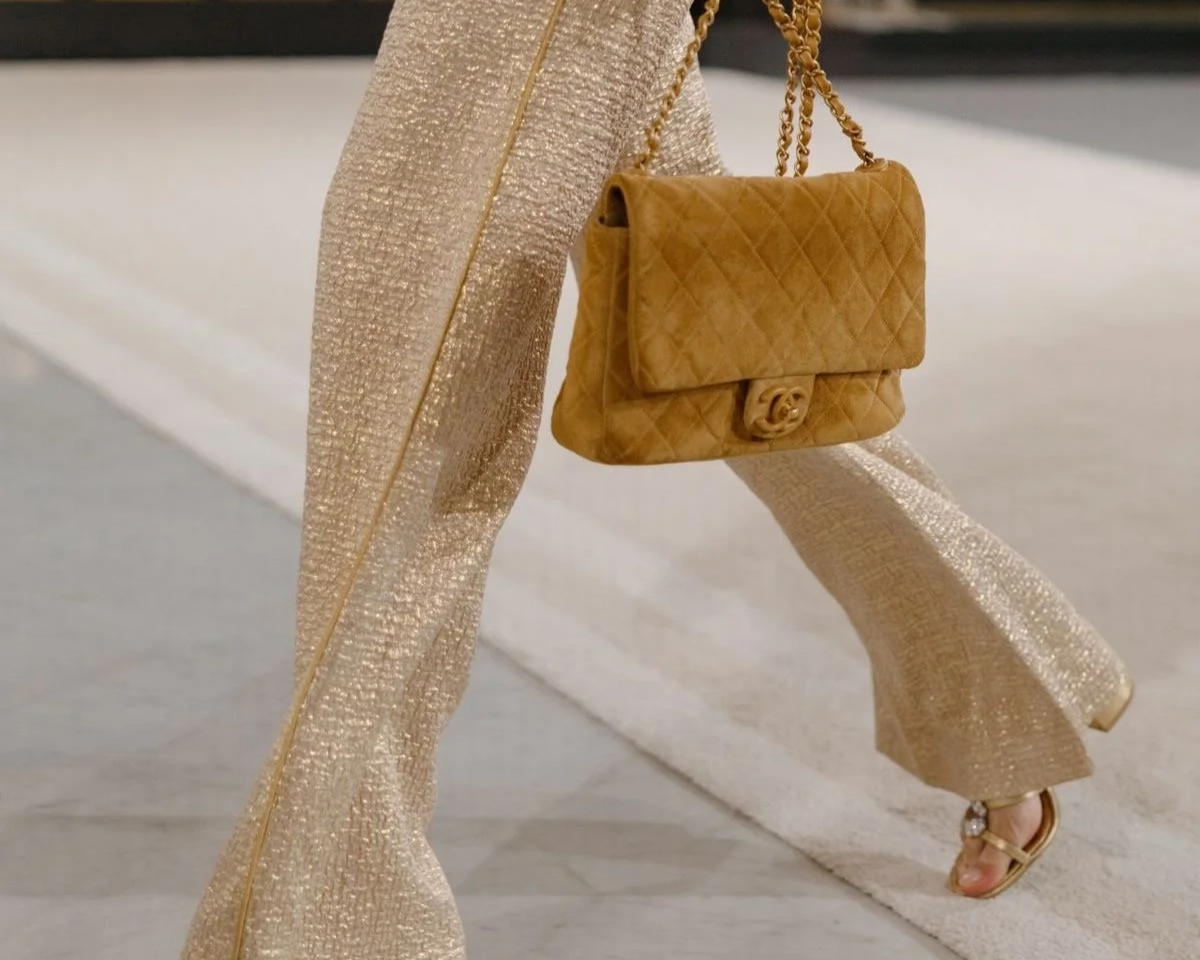
Chanel exemplifies this through its longstanding commitment to controlled distribution. Chanel has historically limited wholesale partnerships, prioritizing its own boutiques as the primary point of sale. Even as digital commerce has expanded across the industry, the brand has maintained strict boundaries around which products are available online, particularly in categories such as handbags and ready-to-wear.
Even though Chanel operates as a scaled luxury house serving both affluent and broader consumers, its tightly controlled distribution preserves the integrity of the brand and sustains the illusion of rarity that defines true luxury. This ensures that each interaction occurs within a curated context. The product is not separated from its setting; it is presented within a space that reinforces its value.
Selectivity also functions as a subtle but powerful form of scarcity. A product that is technically available may still feel rare if it can only be accessed in a limited number of locations. In this way, distribution itself becomes a mechanism of constraint—one that shapes perception as much as it controls availability.
Visibility
Limited Exposure
Beyond production, access, and distribution lies a more nuanced dimension of scarcity: visibility. Luxury brands do not simply control what is available; they also control what is revealed.
Ferrari provides a compelling example of how visibility can be strategically managed. Certain models are introduced with minimal public promotion, offered instead through private channels to a select group of clients. Even within broader communications, Ferrari maintains a degree of restraint, allowing certain products and narratives to remain partially obscured rather than widely broadcast.
This deliberate limitation of exposure serves several purposes. It preserves a sense of mystique, preventing the brand from becoming overly familiar or predictable. It encourages discovery, rewarding those who are closer to the brand with deeper knowledge. It also reinforces the idea that not everything is meant for everyone.
In this dimension, scarcity operates at the level of awareness. Ownership becomes exclusive, but so does understanding. The brand is not fully transparent from the outside, and that opacity contributes to its enduring intrigue.
The Brand Atelier
Everesse is a luxury brand consultancy shaping the strategic architecture that defines meaning, signals value, and sustains distinction.
What luxury scarcity is not
In contrast to these forms of constraint, one type of scarcity is notably absent from true luxury: time-based urgency.
Mass and premium markets frequently rely on temporal pressure to stimulate demand. Flash sales, countdown timers, and “limited time only” messaging are designed to accelerate decision-making and increase conversion. These tactics create urgency by compressing time, encouraging consumers to act quickly before an opportunity disappears.
Luxury brands typically avoid this approach because it introduces the wrong signals. Time-based urgency often implies excess inventory, price sensitivity, or the need to stimulate demand—conditions that are fundamentally at odds with luxury positioning. When products must be pushed through deadlines or discounts, the perception of intrinsic desirability is weakened.
Instead, luxury adopts an inverse relationship with time. Products are not rushed; they are awaited. Access is delayed rather than incentivized. Collections endure rather than expire. The emphasis shifts from immediacy to patience, creating a different psychological dynamic in which the consumer adapts to the brand’s timeline, not the other way around.
The message is not “act now,” but rather “wait, and perhaps you will be granted access.” This reframing preserves dignity on both sides of the exchange, reinforcing the idea that luxury is not pursued through pressure, but through alignment.
Scarcity as strategic intelligence
Each pillar within the Scarcity Spectrum operates as an independent mechanism, yet their true power emerges through integration. A single product may be limited in quantity, restricted in access, confined to select locations, and only partially visible to the broader market. These layers of constraint do not compete; they reinforce one another.
The result is a system in which demand is sustained rather than exhausted. Desire is extended rather than resolved. The brand remains in control of both perception and access, ensuring that its value is neither diluted nor commoditized. Luxury, in this sense, is not defined by how much it sells, but by how consistently it is wanted.
This is not a superficial tactic. It is a form of strategic intelligence—an integrated approach to managing the brand in a way that preserves meaning over time.
The most sophisticated brands do not merely restrict; they calibrate. They understand that too much availability erodes desirability, while too little visibility risks irrelevance. The balance requires discipline, consistency, and a nuanced understanding of both market dynamics and human psychology.
For those building or refining a luxury brand, the question is not whether to employ scarcity, but how to design it with precision across every dimension of the business. This is where true differentiation is established—not through excess, but through control.
For a deeper exploration of how to structure, position, and scale a luxury brand with this level of intentionality, explore our strategic advisory devoted to the architecture and execution of enduring luxury.