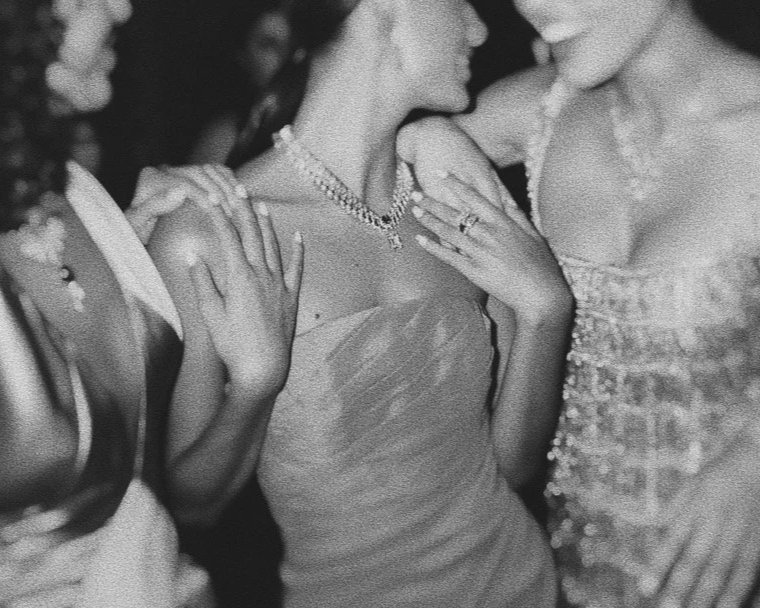
The Cult of Chanel

Source: Chanel
Chanel operates at a level few luxury brands ever reach—defined by control, continuity, and a clear point of view.
Few houses operate with the degree of influence that Chanel has sustained for more than a century. Its standing is not just the result of aesthetic excellence or commercial success, but of a lasting system of belief, symbols, and discernment that governs how the brand operates.
Chanel functions less like a traditional luxury house and more like a cultural institution—one that shapes taste and reflects a shared understanding of what sophistication means. In a saturated industry, this approach stands apart. Many brands compete for attention via volume and novelty. Chanel, by contrast, operates with control, continuity, and a distinct identity.
Chanel remains relevant because its authority is reinforced by discipline and consistency. The result is a brand that exists slightly above the noise—visible, yet never overexposed; influential, yet never chasing validation.
Chanel’s Founding Doctrine
The brand’s foundation can be traced to Coco Chanel, who did not merely design garments, but redefined the relationship between clothing and the body. At a time when dress emphasized decoration and restriction, Chanel introduced a radically different perspective: elegance and ease.
This was not an aesthetic shift alone. It was philosophical. Chanel rejected excess in favor of intention, creating a framework that balanced form and function. These principles established the brand’s underlying doctrine and continue to guide decisions more than a century later.
As the house evolved over different eras, including the iconic tenure of Karl Lagerfeld, this original philosophy was not abandoned but codified. Each successive chapter has expanded upon the foundation instead of replacing it. What began as an individual perspective became an institutional standard.
Chanel’s Current Performance
Today, Chanel remains one of the most influential global luxury houses, with multi-billion-dollar revenues and persistent desirability in ready-to-wear, accessories, and beauty. It occupies a rare space where cultural relevance and commercial strength work in tandem.
This has been evident in the recent collections by Matthieu Blazy. His debut has generated significant attention with its emphasis on construction, craftsmanship, and clarity of design. The response highlighted a broader truth: Chanel does not rely on hype to create momentum. It generates it due to credibility.
Even in a climate where consumers increasingly question pricing and value, Chanel continues to generate demand. This resilience reflects not only product appeal, but the accumulated meaning embedded in the brand. Owning Chanel is not just a purchase; it signals alignment with a legacy that has been carefully established over time.

The Brand Atelier
Everesse is a luxury brand consultancy shaping the strategic architecture that defines meaning, signals value, and sustains distinction.
Chanel’s Operating Principles
Doctrine
At the core of Chanel is a clearly articulated belief system rooted in independence, discipline, and creative authority. This philosophy is not treated as abstract ideals, but as a set of operational filters that govern decision-making. This grounding allows the brand to navigate change without losing direction. Trends emerge and fade, yet Chanel’s internal standards remain steady, ensuring that evolution occurs within a consistent framework instead of reactive shifts.
Codes
Chanel’s visual expression is grounded in enduring elements: the interlocking Cs, tweed, quilting, camellias, and a monochromatic palette. These codes function as a recognizable language that can be reinterpreted across collections. Chanel refines and recomposes these elements instead of pursuing reinvention. This approach creates continuity and allows for variation, ensuring each expression feels both familiar and current. Over time, this strengthens recognition and reinforces presence in the broader imagination.
Control
One of Chanel’s greatest strengths lies in its ability to retain command of every dimension of the business. From centralized decision-making to the ownership of specialized ateliers, the brand operates with a degree of precision that is rare. This oversight extends beyond production into communication, distribution, and experience. The result is alignment that ensures cohesion regardless of geography or category. Chanel operates as a unified system, with each element supporting the whole.
Devotion
Chanel’s influence extends beyond what it produces to how it is perceived. The brand has cultivated a form of loyalty rooted in inspiration and aspiration. To wear Chanel is to signal affinity with an elevated standard of refinement. This creates a sense of belonging: customers are not just acquiring items but are participating in a shared narrative. This dynamic helps explain why demand remains strong even during economic downturns and periods of scrutiny. The value of Chanel is not only tangible, but symbolic, shaped over decades of careful positioning.
Chanel’s Operational Challenges
Despite its strengths, Chanel faces persistent challenges. Its standing at the top of the market introduces tensions that require careful management. One of the most visible is the relationship between price and perceived value. As prices have increased, some consumers question whether quality continues to justify the premium. This reflects wider industry dynamics but remains relevant as expectations evolve.
There is also the balance between global reach and exclusivity. Operating worldwide and preserving intimacy requires ongoing calibration. Similarly, digital platforms create pressure for increased presence, which must be managed carefully to protect the brand’s selective mode of marketing. These tensions are not signs of weakness, but indicators of complexity. Sustaining influence at this level requires adjustment and the preservation of core integrity.
Chanel’s Next Chapter
The appointment of Matthieu Blazy marks a new phase for Chanel. His early work suggests a focus on craftsmanship, construction, and “everyday” couture—qualities that align closely with the brand’s ethos. This transition comes at a time when the industry is undergoing significant change, driven by technological advancement, shifting generational expectations, and a global recession.
Chanel has historically adopted new tools selectively, integrating innovation in ways that enhance operations and protect the integrity of the brand experience. The challenge moving forward will be to preserve this balance: evolving in response to external forces and retaining what makes Chanel distinct. If history is any indication, the house is well positioned to do so.
Insights for Luxury Professionals
Chanel’s longevity is the outcome of a rigorous brand-building process, where each decision supports a clearly articulated point of view. Many brands pursue visibility. Chanel has established its standing with consistency, clarity, and control. This approach has allowed it to remain relevant for decades without relying on reinvention.
Its authority is not asserted. It is accumulated—layer by layer, collection by collection. Chanel offers a set of lessons that extend beyond its category:
Establish a clear philosophy before shaping outward expression
Develop recognizable elements that can evolve without losing coherence
Maintain cohesion in all aspects of the business
Prioritize long-term positioning over short-term relevance
Manage presence with intention instead of excess
Create systems that support consistency over time
The broader implication is clear. Enduring brands are not formed by isolated moments of success, but by sustained coherence. Chanel demonstrates that influence is not created by constant change, but by the disciplined reinforcement of what already works.