Does Luxury Even Matter Right Now?
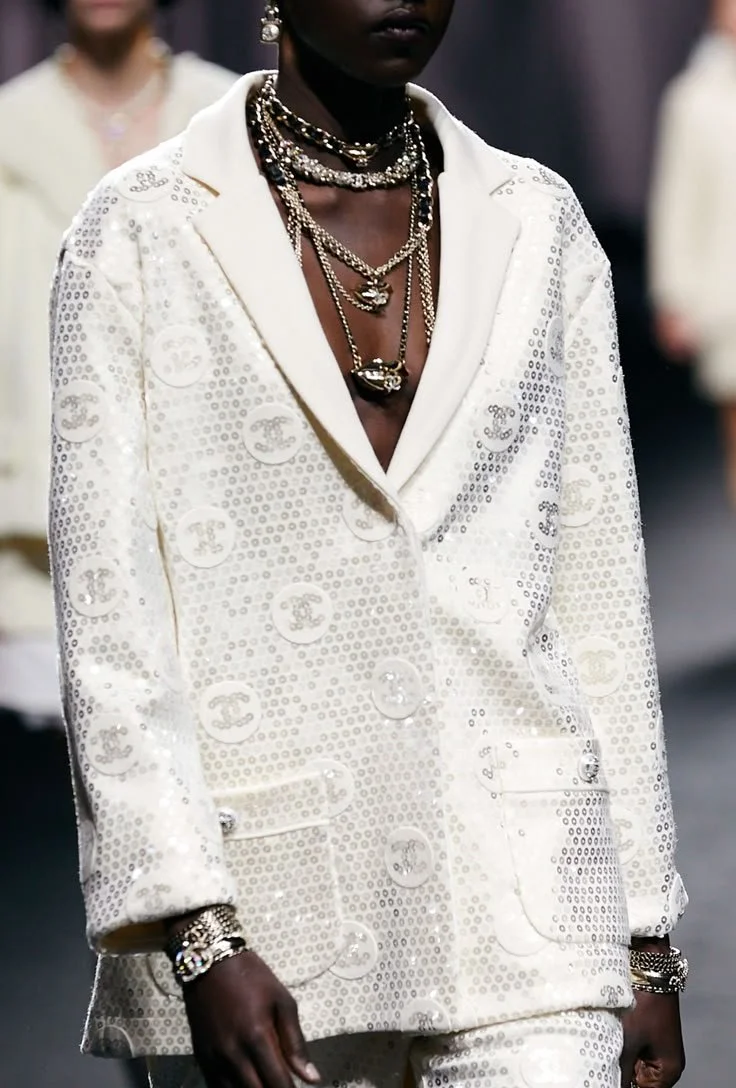
Source: Chanel
A cultural and strategic examination of luxury in times of global political, economic, and social instability—exploring its ethics, function and endurance.
During periods of financial strain, political tension, and social unease, luxury can appear misaligned—raising a genuine inquiry as to whether it still deserves attention amid uncertainty and constraint. In such a climate, indulgence can seem excessive when many are navigating limitation and instability.
For some, the pursuit of elevated experiences feels disconnected from collective sentiment. For others, the enjoyment of those experiences is tempered by the contrast with what is unfolding around them. And for those excluded from access altogether, luxury can appear not only unnecessary, but symbolic of the disparities that exist within society.
This unease is not new. It consistently surfaces during downturns, conflicts, and difficult phases, when priorities shift and scrutiny intensifies. In each instance, luxury is asked to justify its place not only economically, but also ethically and socially. The more important inquiry, however, is not whether luxury should exist, but how it operates under these circumstances. Answering that requires looking beyond the surface and examining its underlying role.
In unstable environments, discipline often weakens across industries and institutions. Decisions become reactive, driven by urgency rather than strategy. Craft gives way to convenience, and long-term thinking is replaced by short-term gain. Luxury, however, offers a different orientation, grounded in discipline and discernment.
When reduced to merely a category of expensive offerings, luxury is easy to dismiss. Yet, at its highest level it represents a system of values and a collection of codes. These are not indulgences, but standards. Even as surrounding dynamics fluctuate, luxury maintains consistency. In the midst of volatility, this gives it a stabilizing function, reinforcing integrity within society that might otherwise diminish.
Luxury reinforces the idea that quality is not conditional, and that aspiration remains essential, especially in difficult times. Complacency narrows perspective and limits possibility. Aspiration expands perspective and creates direction under constraint. At the same time, the role of luxury should not be overstated so this article offers an impartial analysis.

The Brand Atelier
Everesse is a luxury brand consultancy shaping the strategic architecture that defines meaning, signals value, and sustains distinction.
The Ethics of Luxury
Luxury invites scrutiny because of how it is perceived during periods of strain. In difficult climates, three concerns tend to surface consistently: environmental impact, social disparity, and the perceived disconnect between price and value. These critiques are not unfounded, but they are often oversimplified. The responsibility, therefore, falls on luxury brands to address them—not defensively, but through clear alignment between what they represent and how they operate.
Environmental Impact
At its worst, luxury can be associated with excess—overproduction, waste, and resource intensity that contradict its own positioning. At its best, however, it offers a counterpoint to disposable consumption. True luxury is not defined by volume, but by permanence. Pieces are designed to endure, to be repaired, and to be passed down.
This is where the industry must be precise. Sustainable sourcing, reduced production cycles, and an emphasis on longevity are not optional gestures; they are essential to maintaining credibility. When executed correctly, luxury supports a more conscious form of consumption, rooted in fewer, better choices.
Social Inequality
During periods of financial pressure, highly visible displays of wealth can feel insensitive, even if unintentionally so. This is not a question of existence, but of expression. The most sophisticated brands understand that their presence must be calibrated. Messaging may need to become more restrained, less celebratory, and more grounded in substance than spectacle.
This is also the moment to deepen meaningful contribution. Philanthropic efforts, community investment, and long-term social initiatives are not performative; they are a reflection of scale. Luxury, as a sector with significant resources, carries both the capacity and the responsibility to contribute meaningfully, and should do so with intention.
Value Transparency
As brands scale, the risk is not only overextension, but a gradual loss of trust. When output increases without a corresponding commitment to craftsmanship, the perception of worth weakens. This tension becomes particularly visible when pricing decisions appear disconnected from substance.
The example of Chanel raising prices during the pandemic illustrates how quickly optics can become misinterpreted, regardless of the underlying rationale. The response is not to justify excessively, but to gracefully reinforce authority. Artisanship and material quality must be evident. Pricing should reflect what is truly being created, not simply what the market may bear.
The Function of Luxury
Luxury is often reduced to consumption, yet its purpose extends far beyond commerce. At its highest level, it operates as a powerful force that supports economies, shapes culture, and inspires individuals to elevate their lives. Its impact is not confined to products, but embedded in the broader structures it sustains and the meaning it helps to create. Understanding its function is essential to understanding why luxury persists.
Economic Infrastructure
The luxury industry is an ecosystem that encompasses a vast network of industries, skills, and livelihoods. The world’s leading luxury groups, including LVMH, employ tens of thousands across continents, from ateliers and workshops to retail and operations. These are not abstract entities, but multinational corporations sustaining specialized talent and contributing to financial stability. The contraction or collapse of such a system would have tangible consequences for workers, communities, and economies worldwide.
Creative Inspiration
Beyond economics, luxury serves a psychological role that becomes particularly significant in difficult periods. The desire for beauty, refinement, and elevation does not disappear under pressure; it often intensifies. People look for sources of inspiration that provide a sense of hope and forward movement. Exposure to thoughtful design, creative expression, and aesthetic excellence offers a form of enrichment that is not trivial. It stimulates imagination, encourages creativity, and preserves a sense of possibility. Without this dimension, environments under strain risk becoming purely utilitarian, stripped of joy altogether.
Cultural Preservation
Luxury also operates as a cultural force. It preserves and advances forms of craftsmanship, design, and artistic expression that might otherwise be lost. Techniques passed down across generations—whether in leatherwork, tailoring, watchmaking, or haute couture—require sustained investment and mastery to survive. Luxury houses act as stewards of these practices, ensuring their continuation in a rapidly changing world. This contribution is often overlooked, yet it is central to the industry’s broader significance. It is not simply producing goods; it is maintaining a lineage of artistic knowledge.
The Endurance of Luxury
Luxury has demonstrated an unusual ability to persist across cycles of chaos. This resilience is rooted in a distinct operating model that prioritizes continuity and clarity of identity over unbridled expansion. Houses such as Hermès have endured world wars, financial crises, and societal transformation by adhering to a consistent set of principles, even as external circumstances shifted dramatically.
Operational Precision
One of the defining characteristics of resilient luxury brands is discipline. In challenging phases, they do not accelerate output in pursuit of short-term gain. Instead, they refine. Collections are edited, assortments narrowed, and emphasis placed on what is essential. This reduction is not a retreat, but a strategic recalibration that strengthens adaptability. By concentrating on their ethos—design language, craftsmanship, and heritage—luxury brands maintain coherence while others fragment.
Client Prioritization
Another key factor is the prioritization of relationships over reach. During periods of uncertainty, broad visibility often becomes less effective, while depth of engagement grows in importance. Luxury brands respond by strengthening connections with their most loyal clients, offering more personalized experiences and reinforcing long-term trust. This shift away from mass exposure toward intimacy reflects a deeper understanding of where enduring value resides.
Brand Integrity
Finally, brand integrity plays a critical part. For instance, while many sectors rely on discounting to sustain demand, luxury brands tend to resist such measures, recognizing the long-term impact on perception. Maintaining consistency requires confidence, but it also reinforces positioning and signals stability. This does not mean ignoring economic conditions; it means navigating them without undermining the foundations of the brand.
Does Luxury Matter?
Luxury will always matter because it is a sensibility that raises standards and increases expectations, prompting society to enhance and advance itself. It defines what is possible at the highest level, shaping not only outcomes but the mindset behind them. It establishes a benchmark that extends beyond its immediate sphere, setting a level others respond to, whether by reaching toward it or adjusting against it.
Its significance lies in its ability to create upward movement. Luxury introduces a gap between what exists and what could be, pushing individuals and institutions to evolve rather than settle. It resists the pull toward expediency and dilution, reinforcing the idea that progress is not simply about expansion, but about elevation. In this way, luxury does not sit apart from society. It shapes its trajectory by continually redefining what is worth striving for.